| The Trip South |
 |
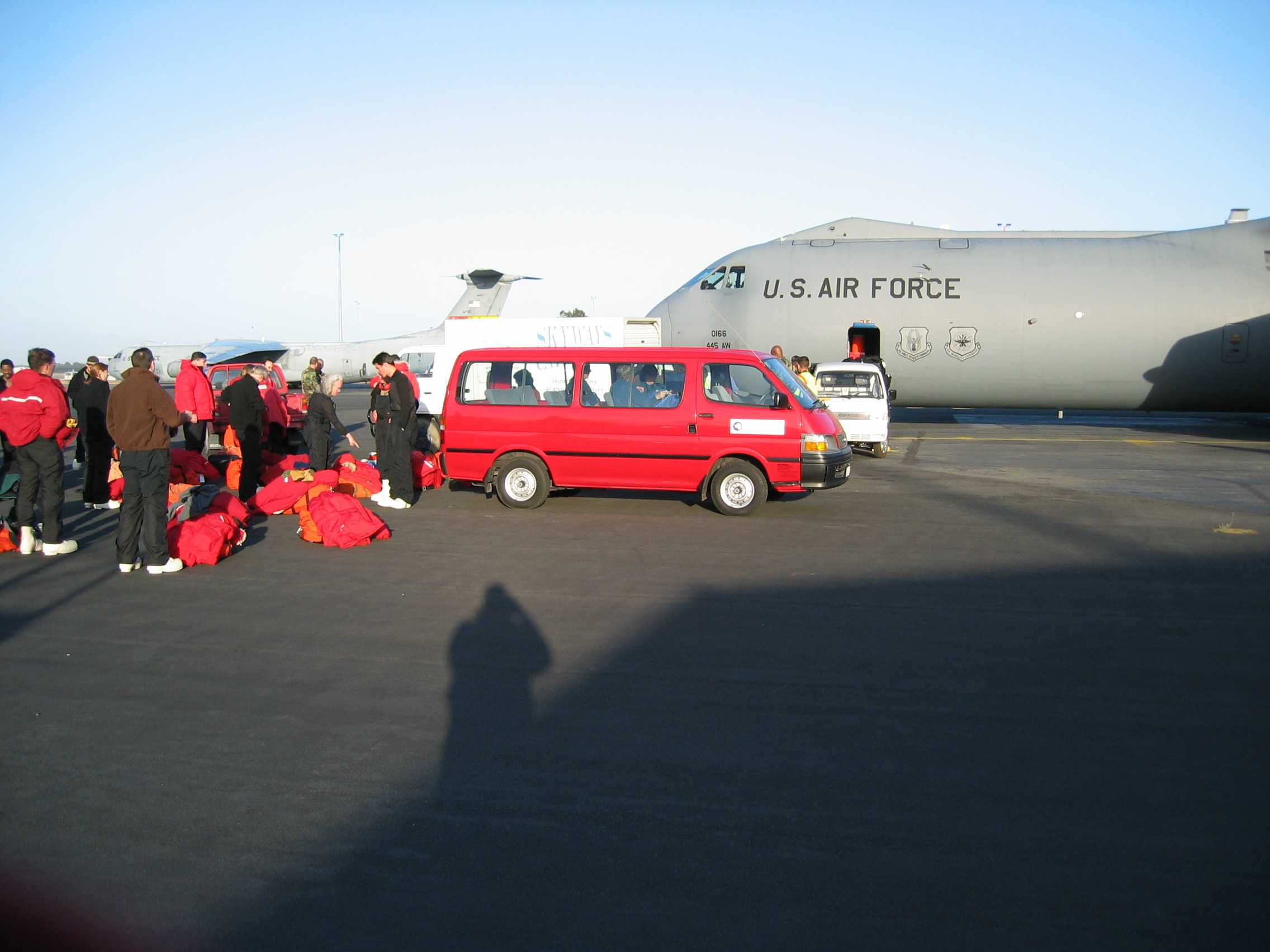
The
crew is ready to board our flight south to McMurdo. It's
rather warm in Extreme Cold Weather (ECW) gear in Christchurch
in the summer. |
|
|
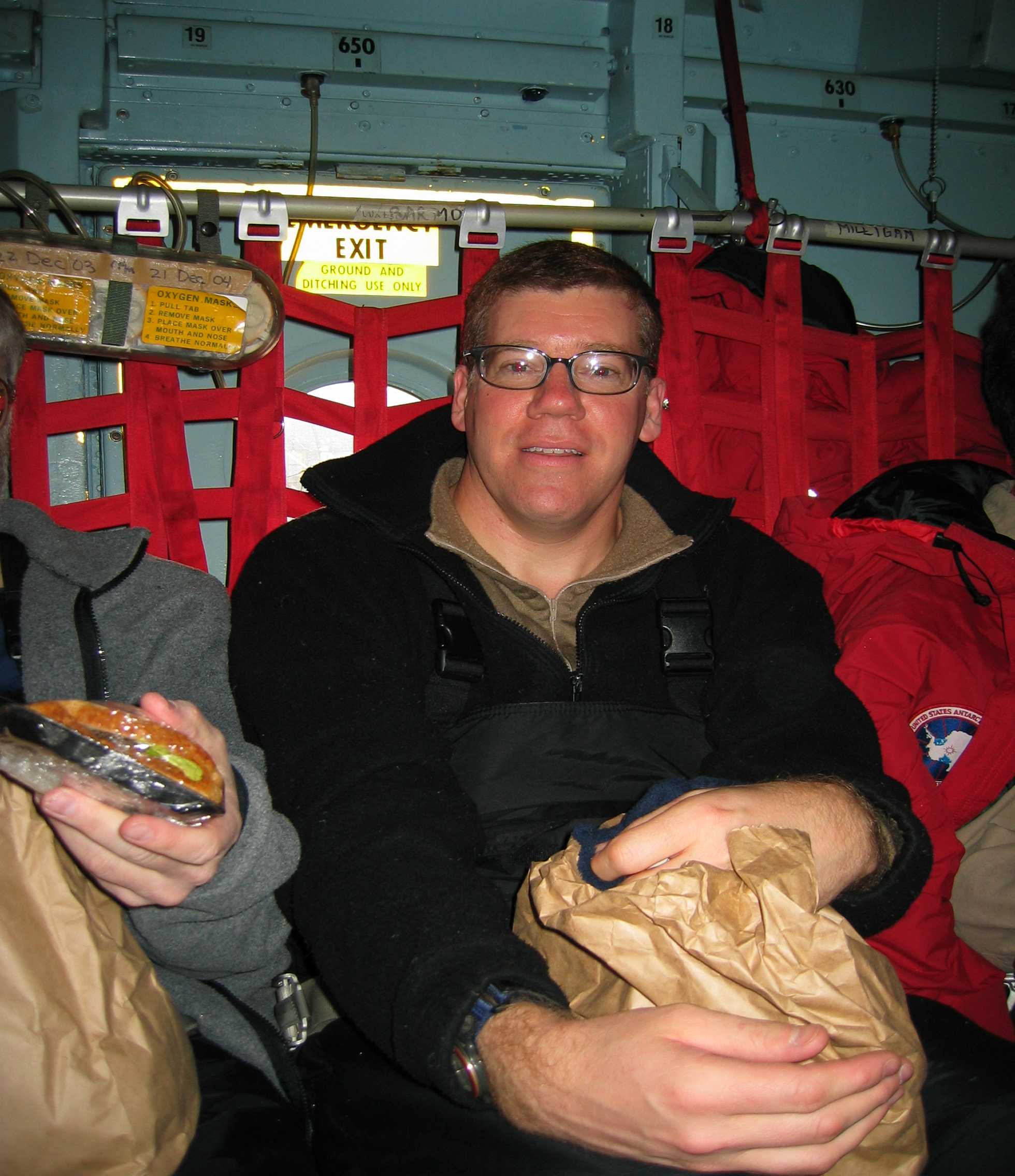
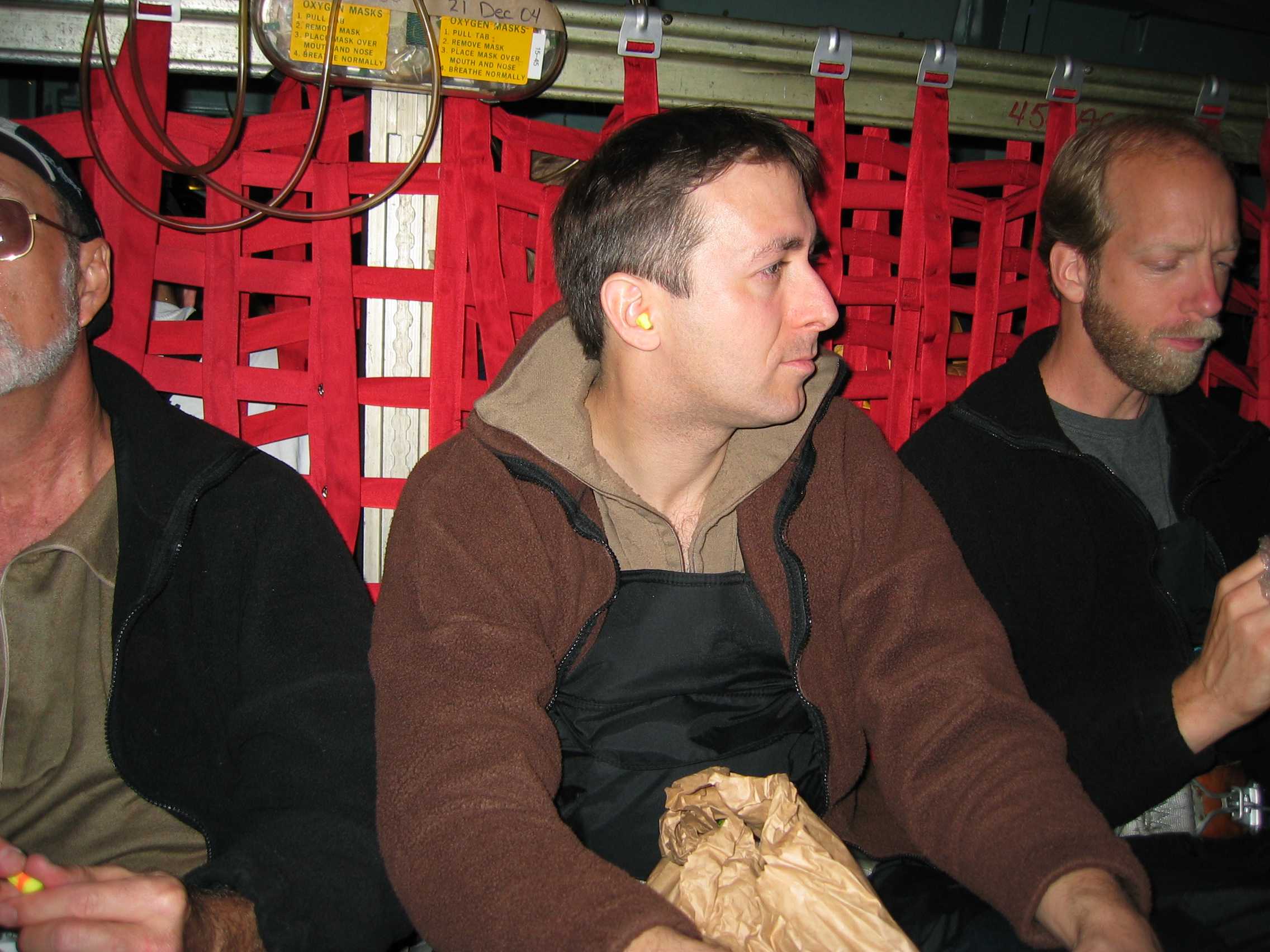
Kevin
and Doug flying south on the crowded C-141. |
 |
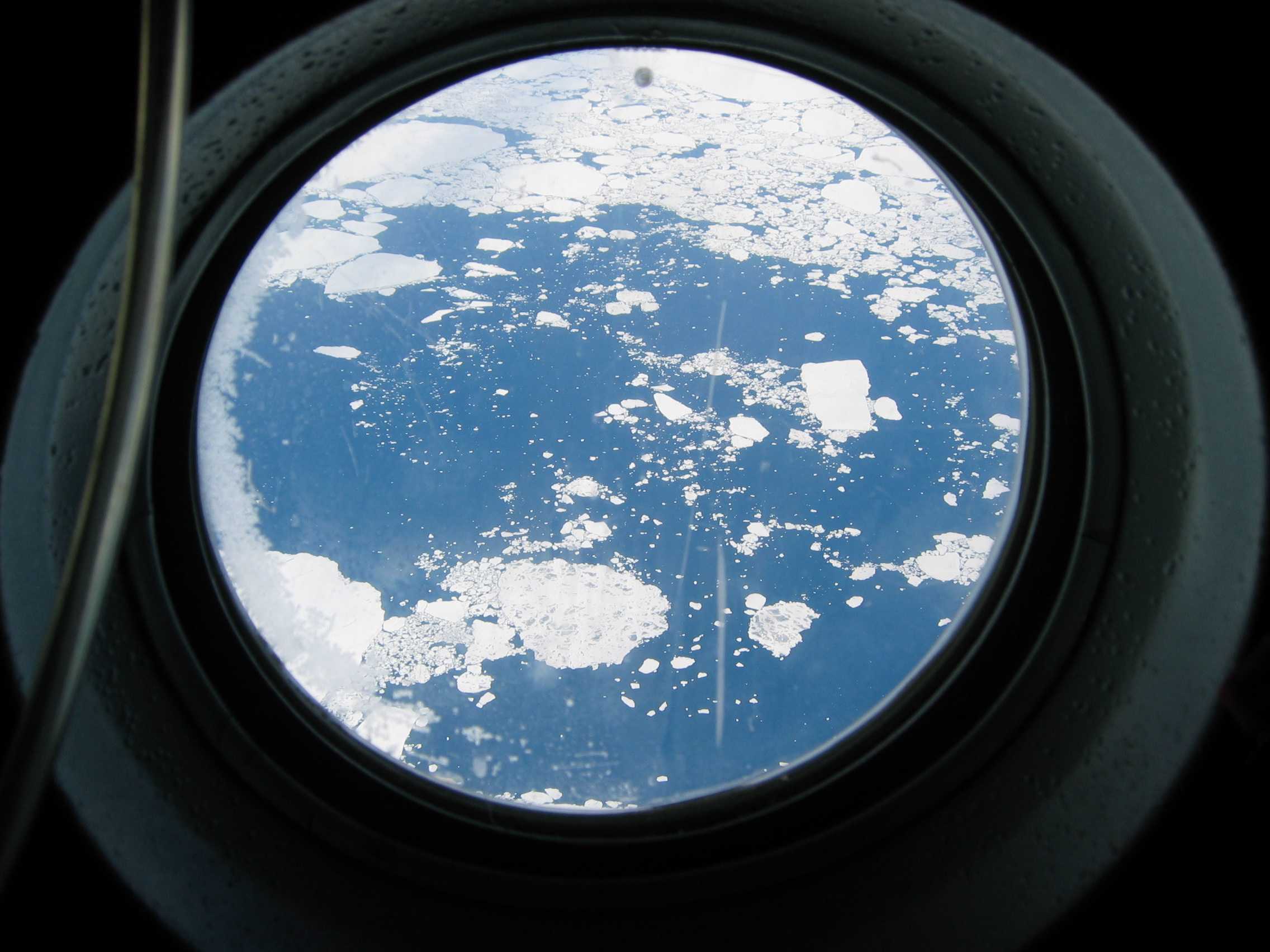
Our
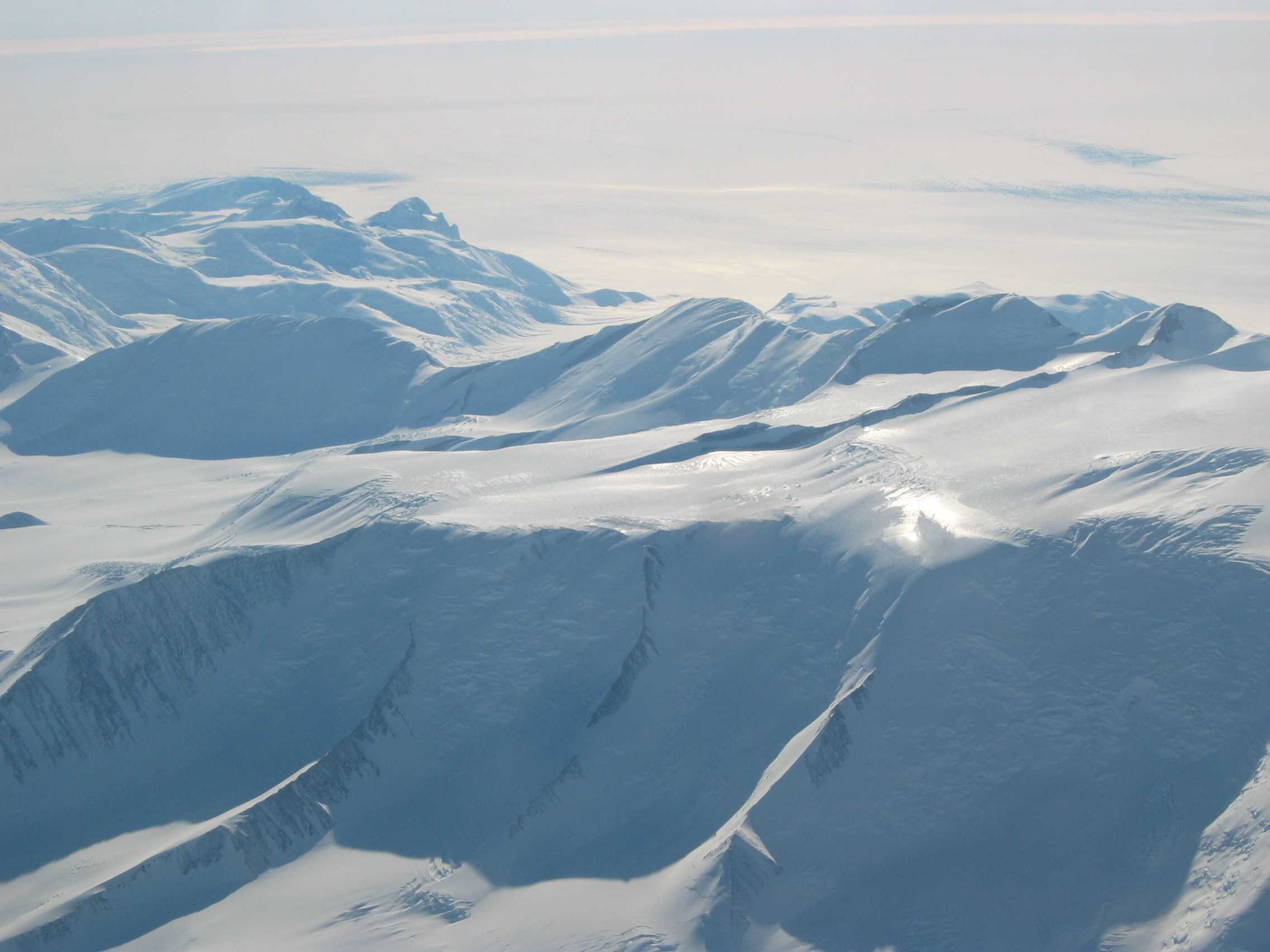
first view of ice from the window of the C-141! |
|
|
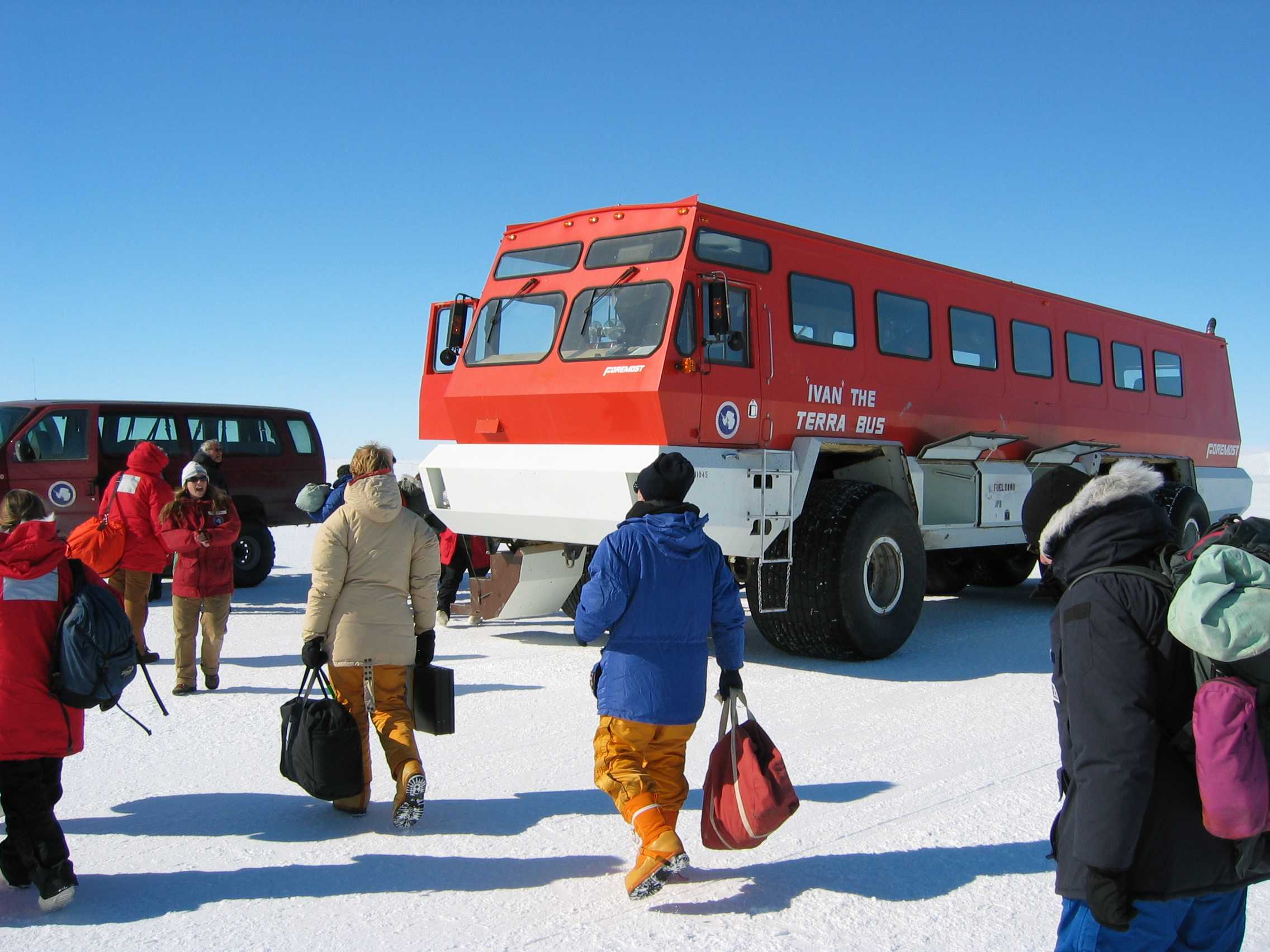
Everyone
from the flight is getting ready to board "Ivan the Terra
Bus for the trip from the Pegasus ice-shelf runway to
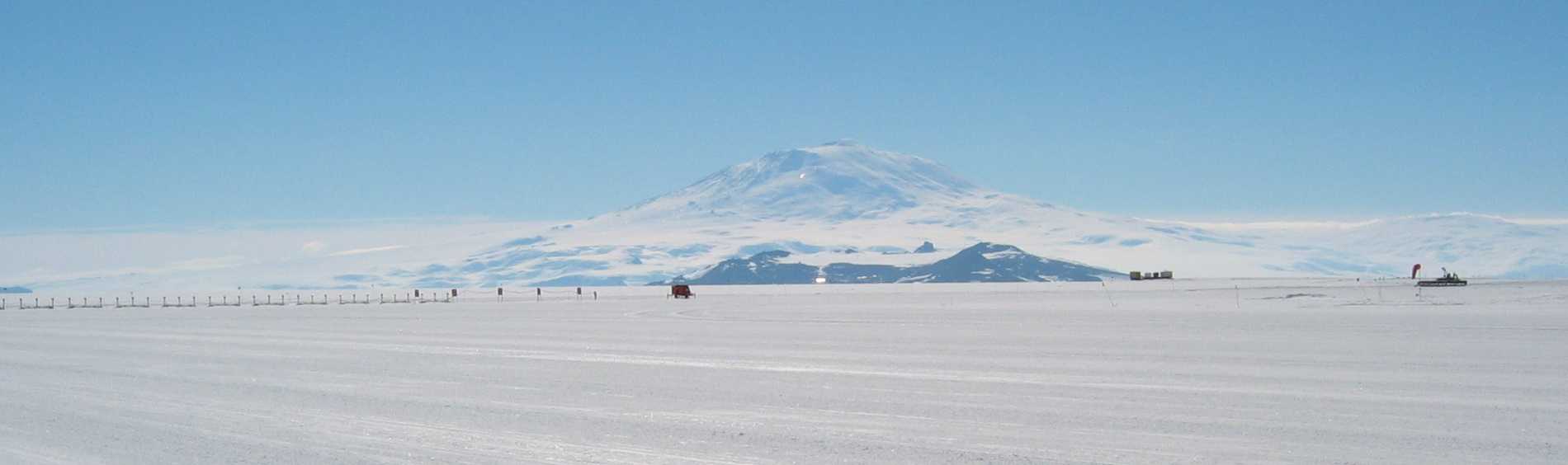
McMurdo. Ivan goes very slowly, but the scenery is great. |
| McMurdo
|
|
|
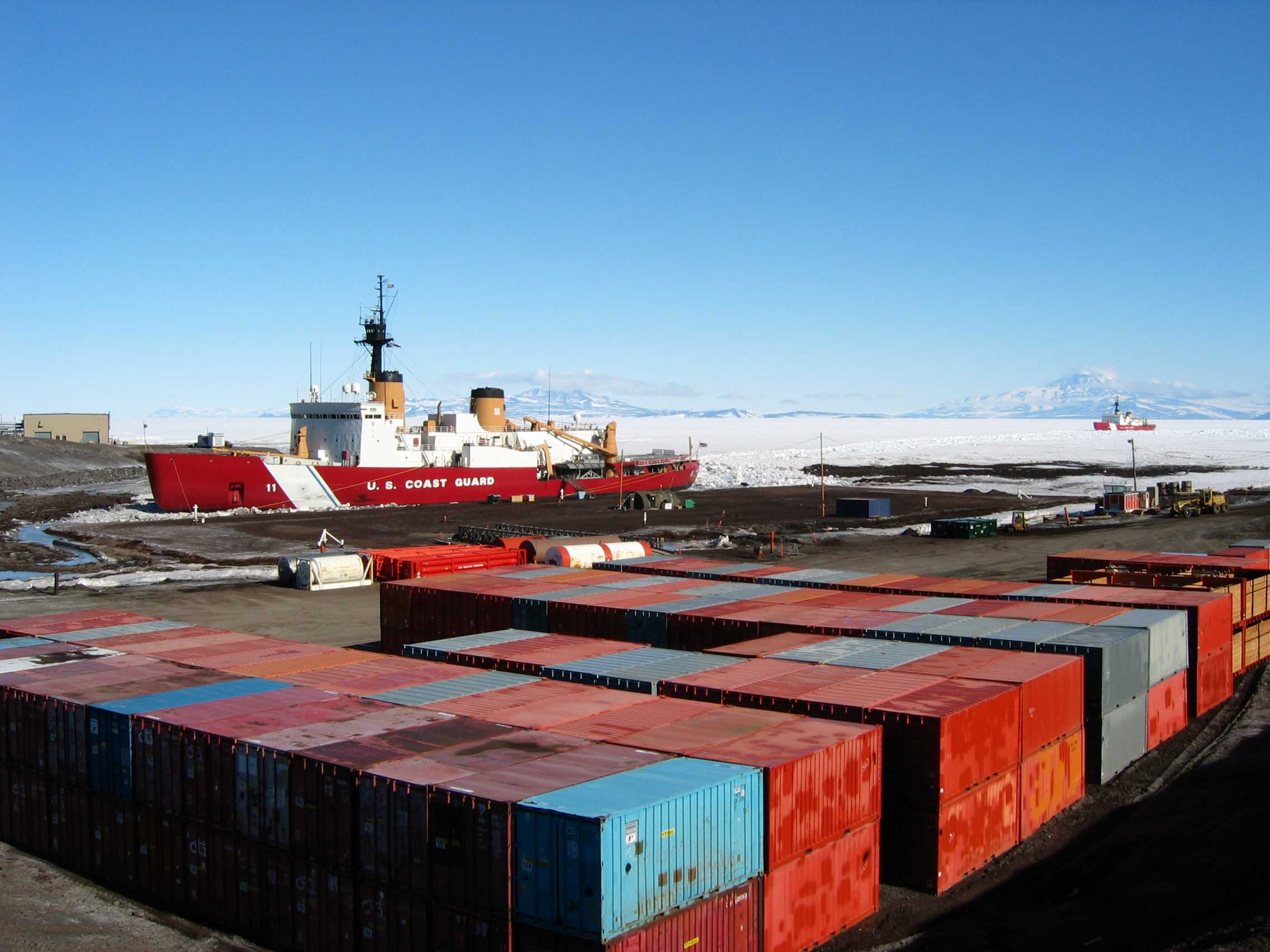
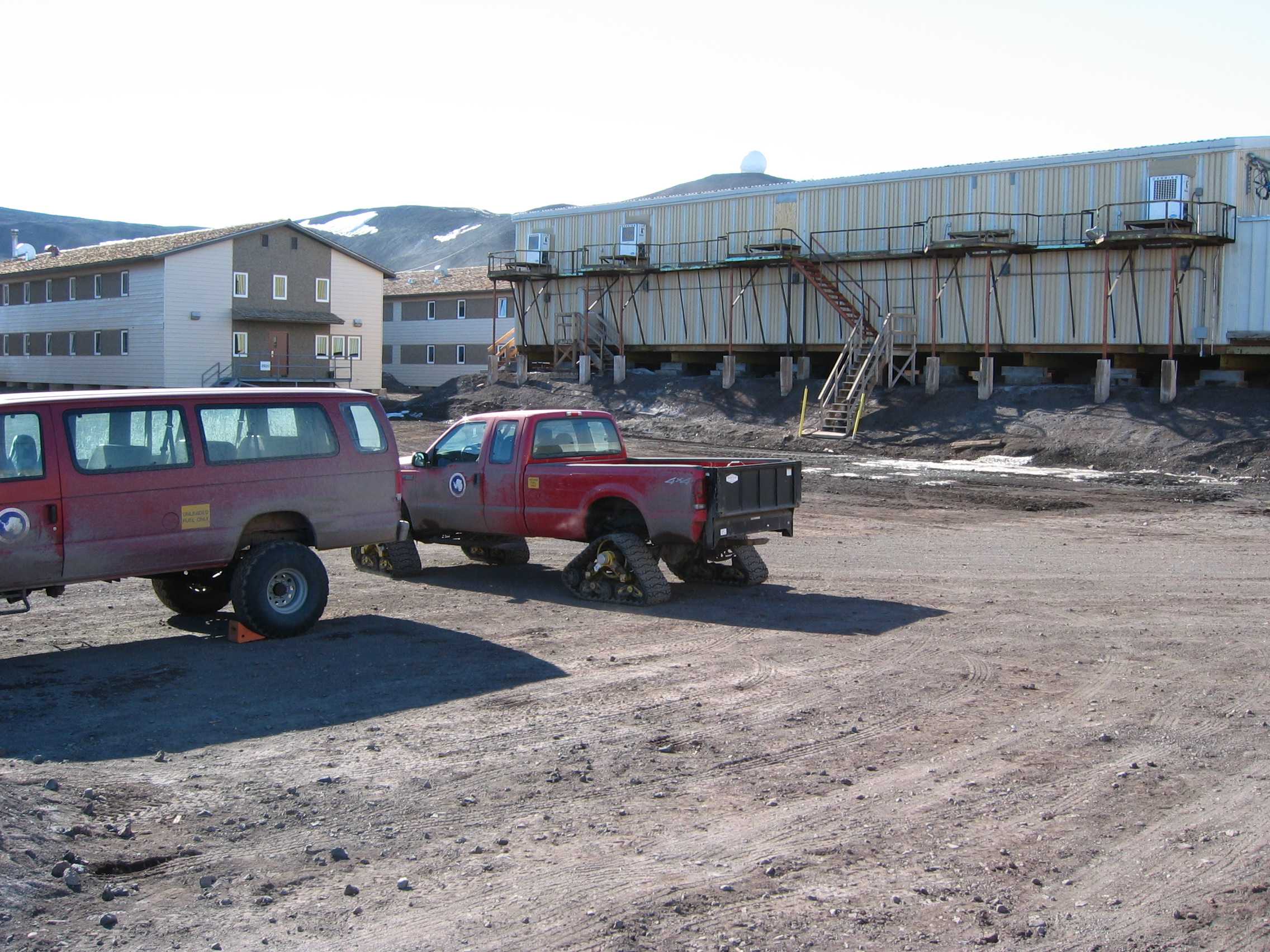
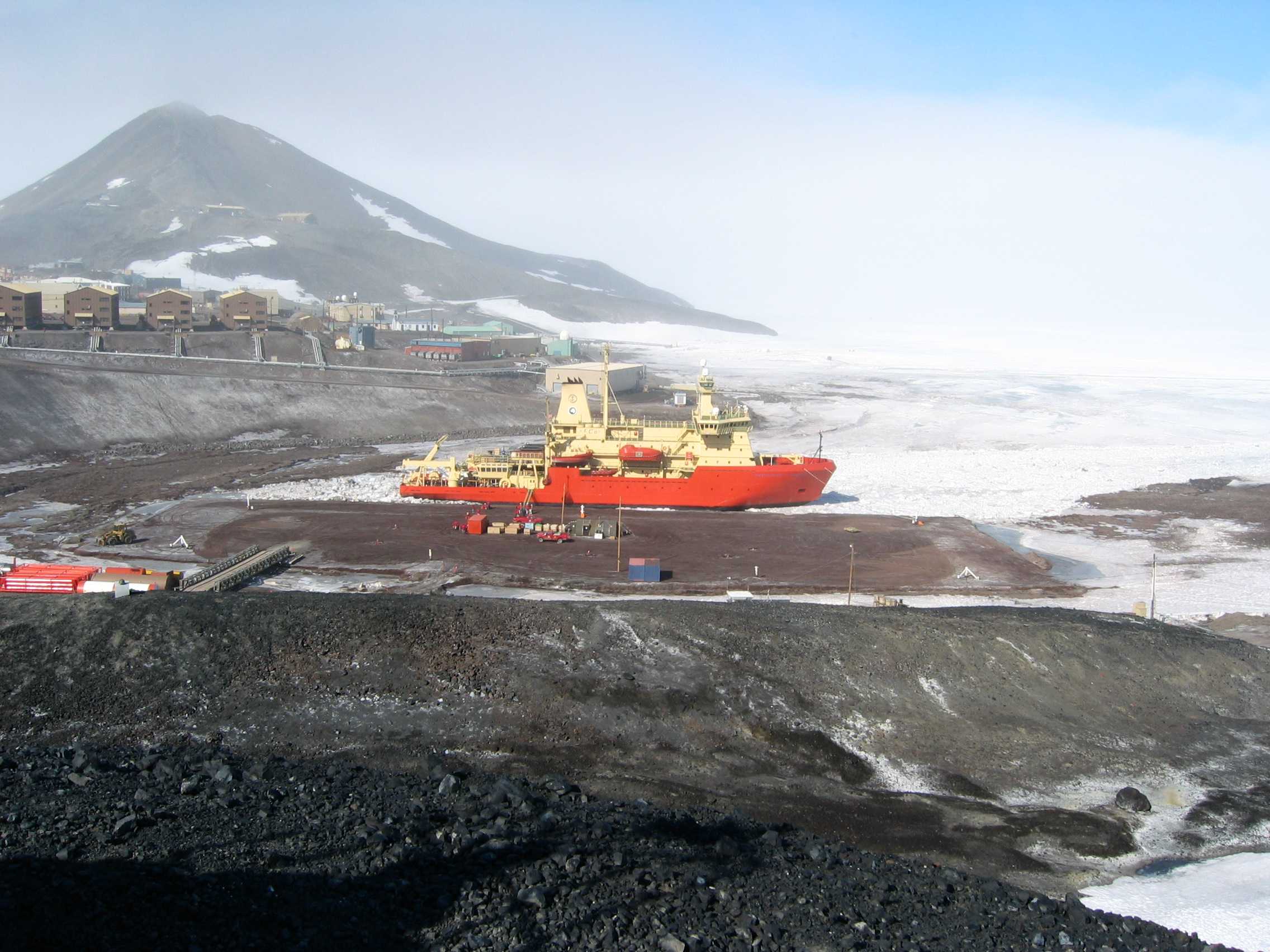
Some
scenes from McMurdo: The ice breakers Polar Sea and Polar
Star hard at work to clear the port, the coolest pickup
truck ever, and the research vessel Nathanial Palmer with
Observation Hill in the background on a very windy day.
|
 |
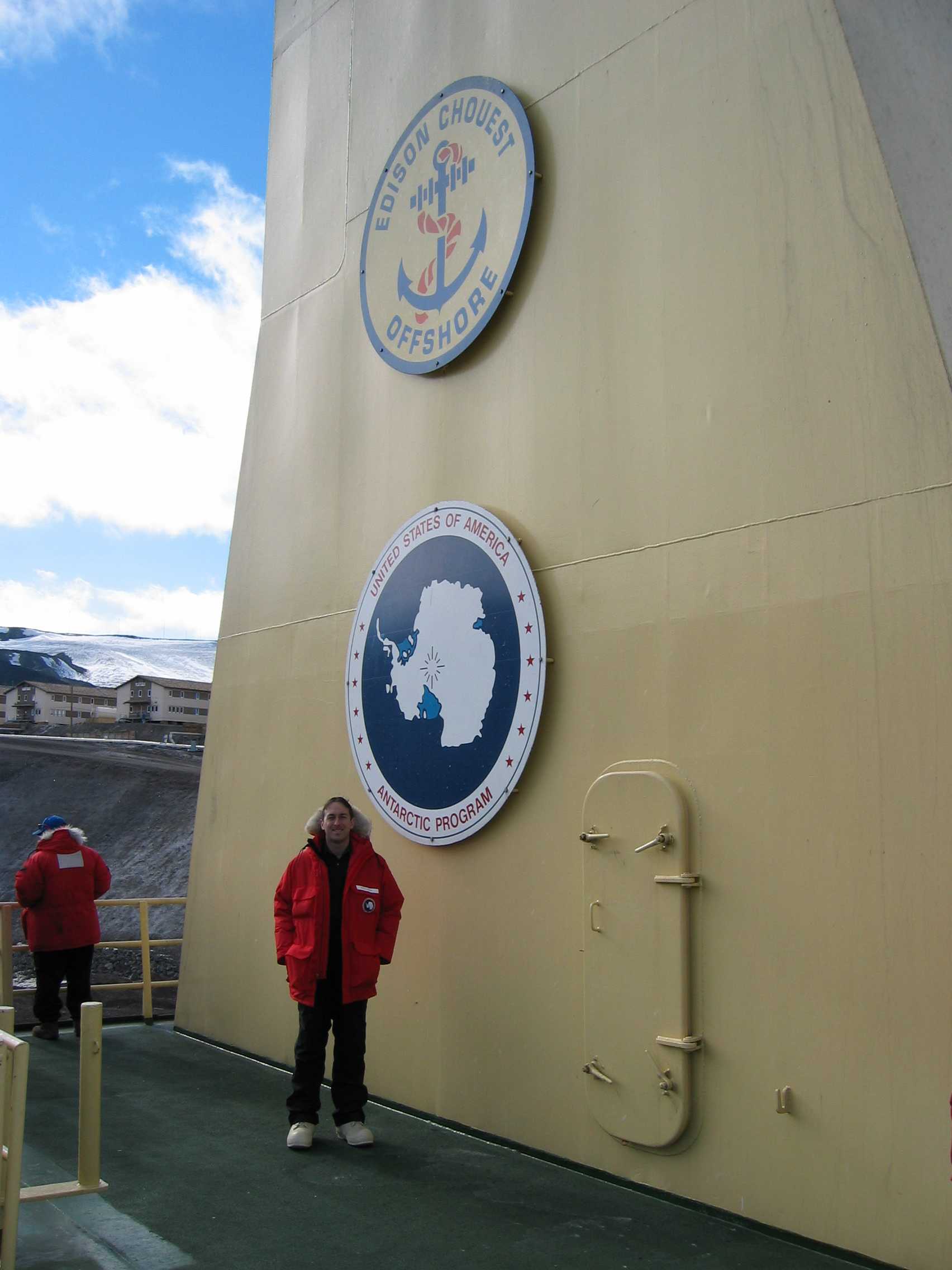
Kevin
standing on the Nathanial Palmer. Most of the people on
our flight from Christchurch were going out on the Palmer
for a 30-day marine geophysics cruise in the Ross Sea. |
|
|
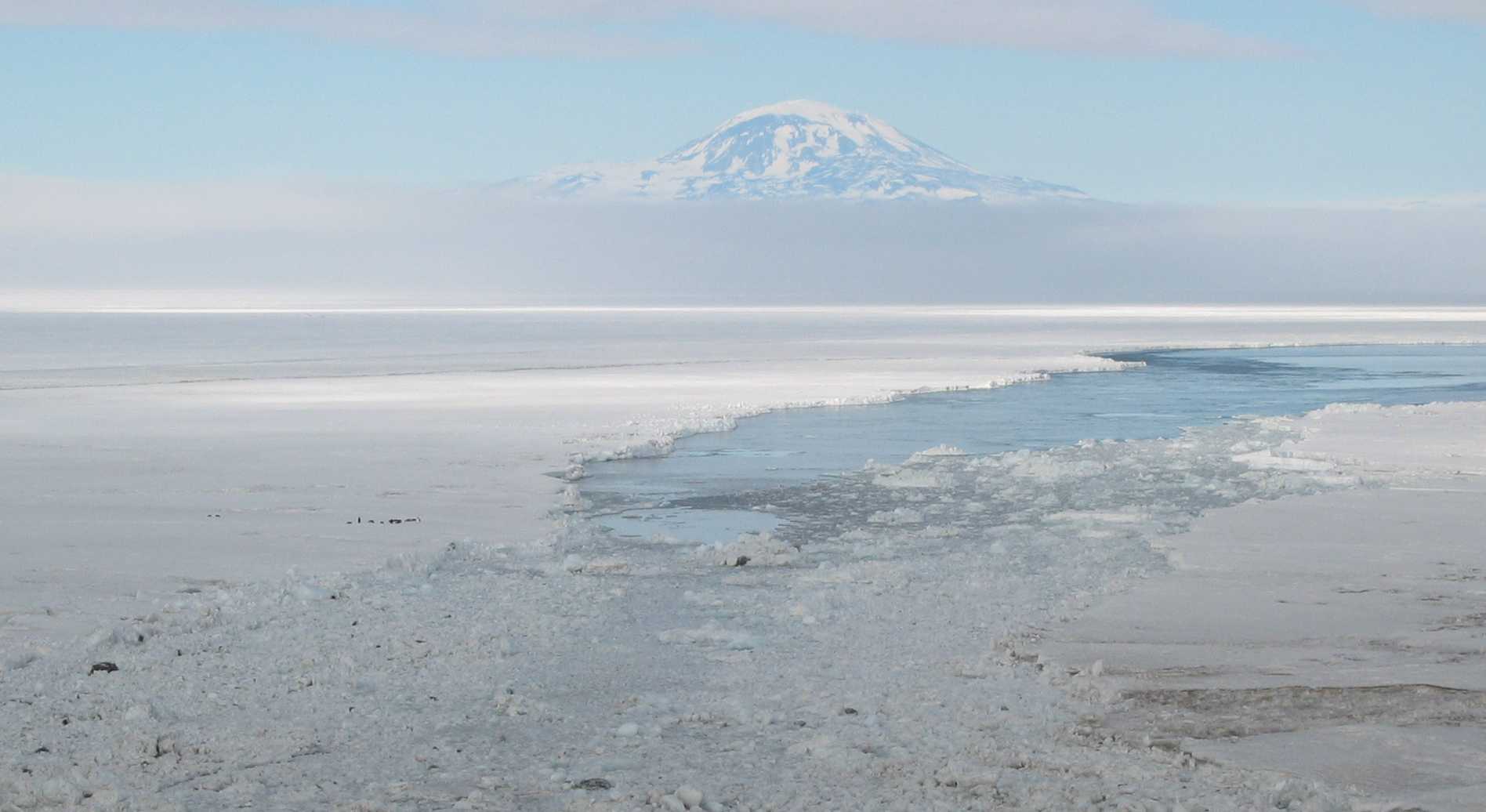
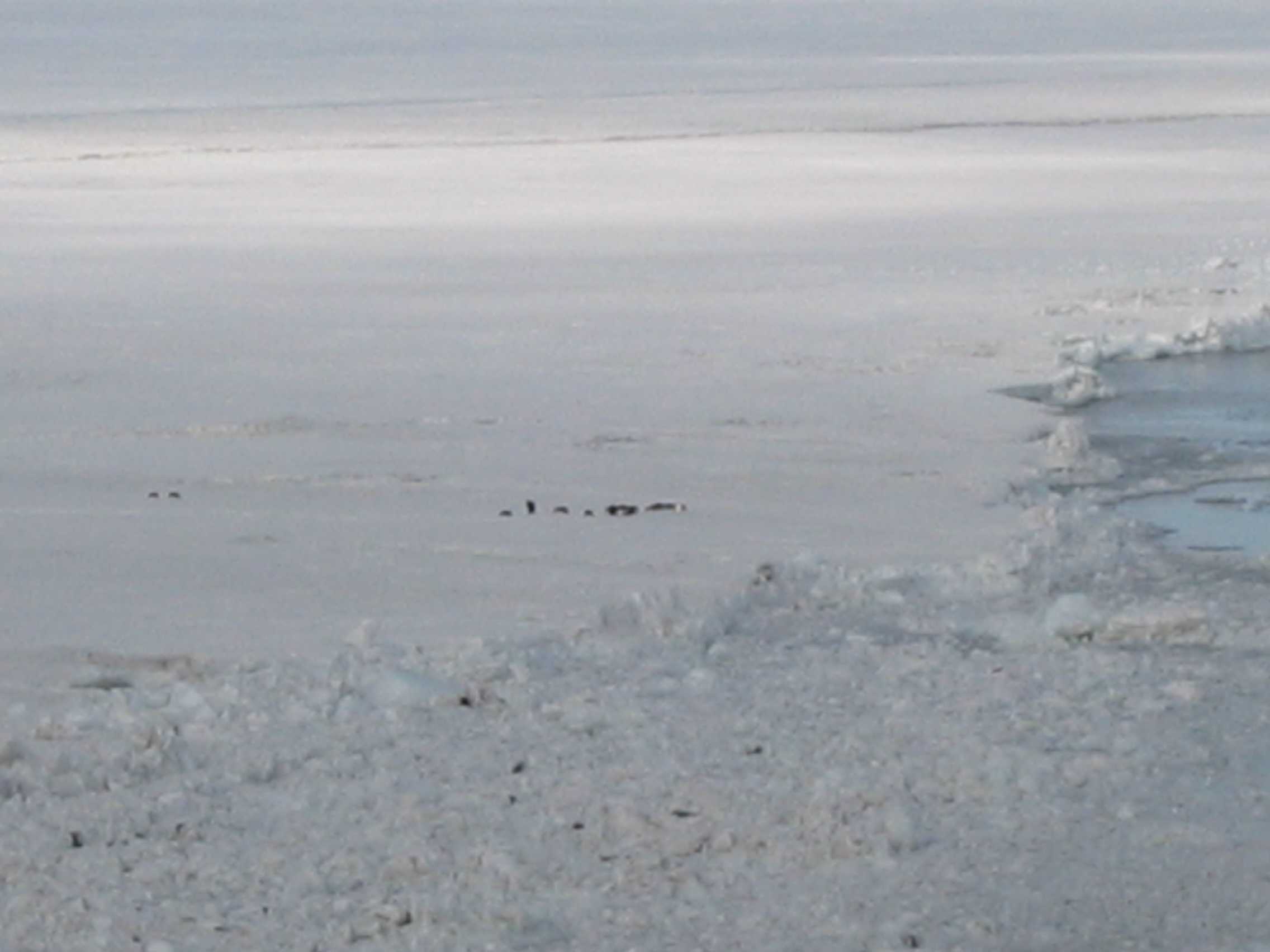
Penguins!
That's right a colony of penguins just to the left of
the open waterway. Look closely. Moments after this shot
we saw a minke whale in the waterway right near the pens.
I should have brought a longer lens. |
| South to the Pole |
|
|
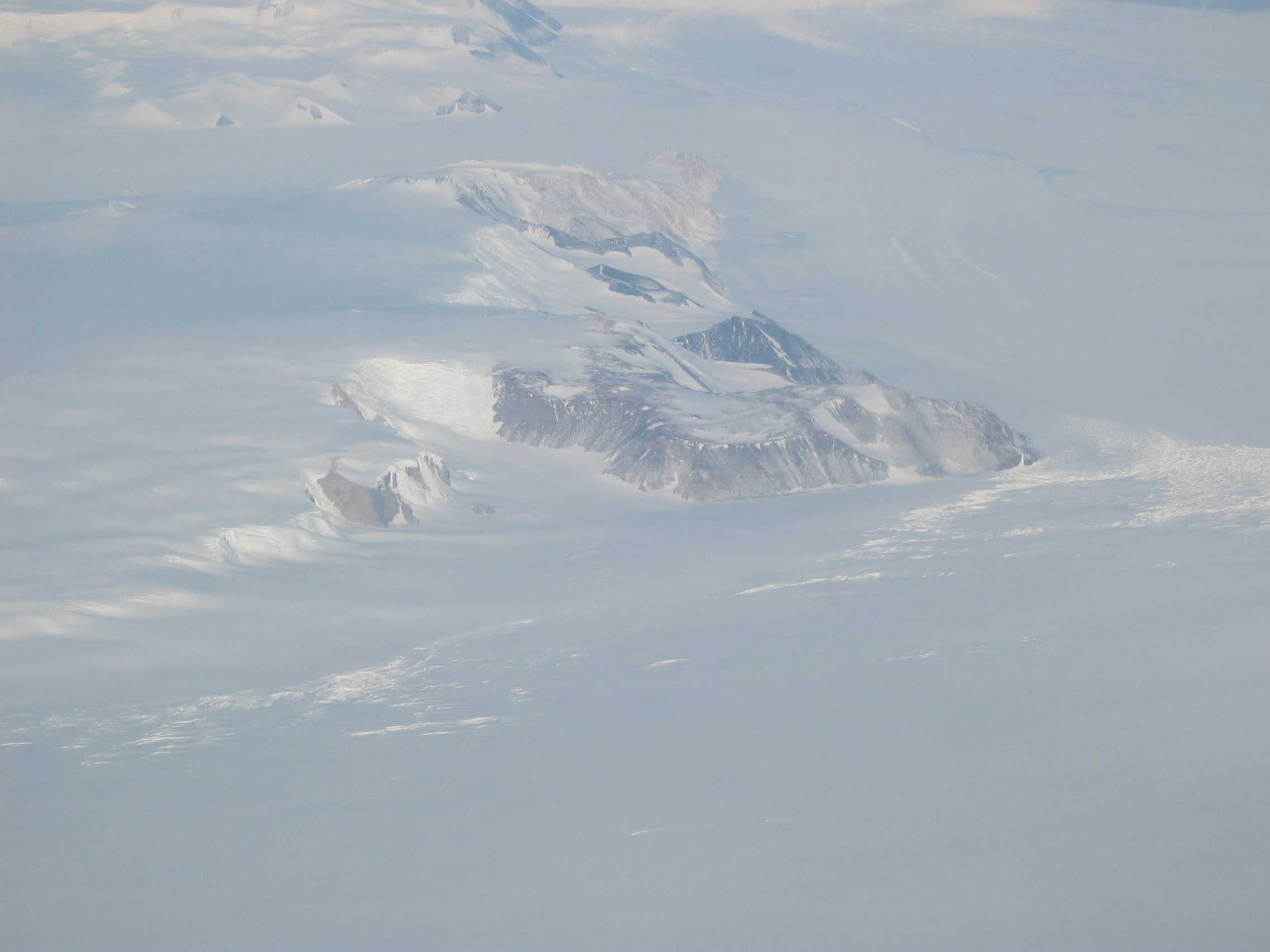
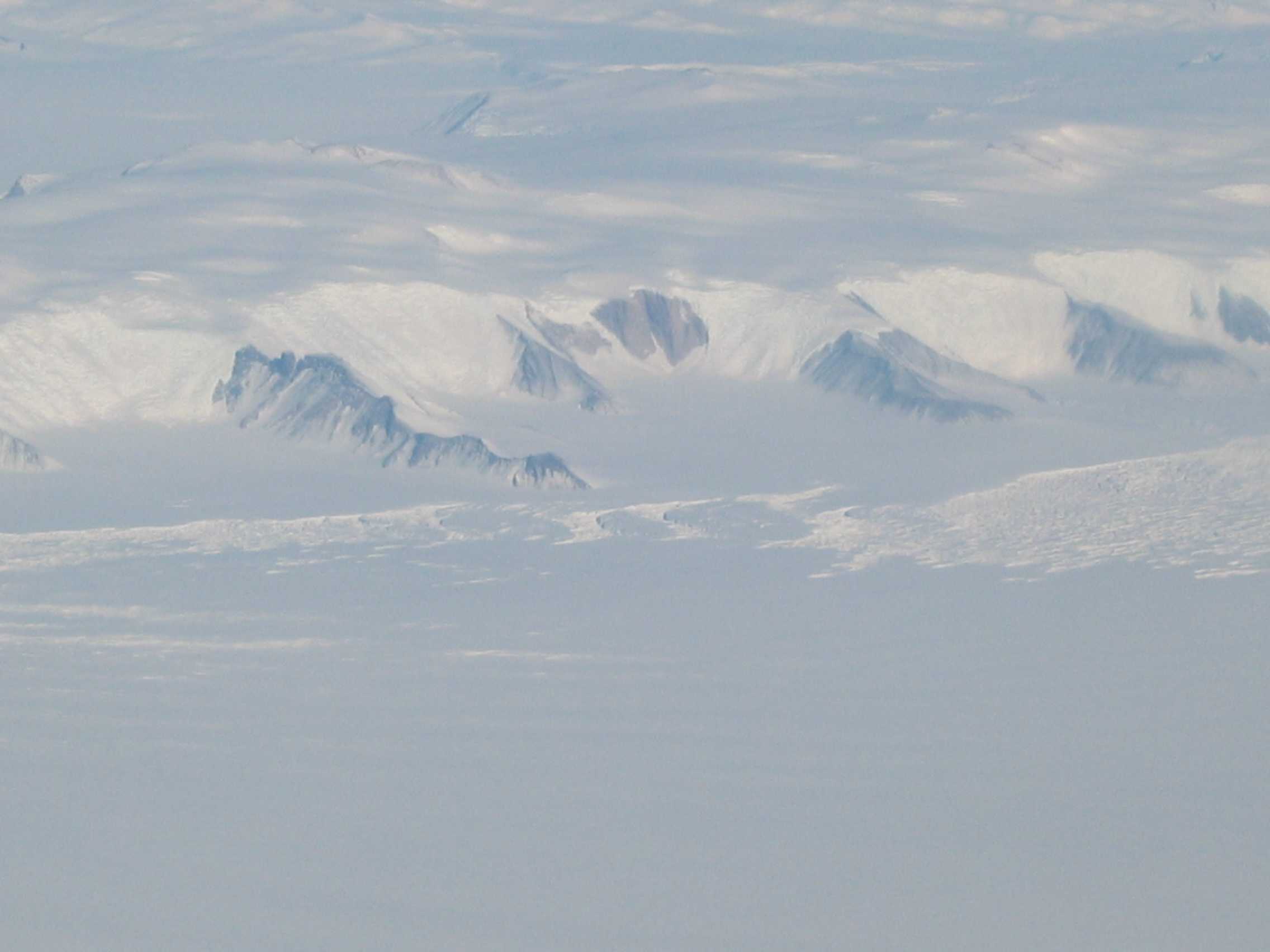
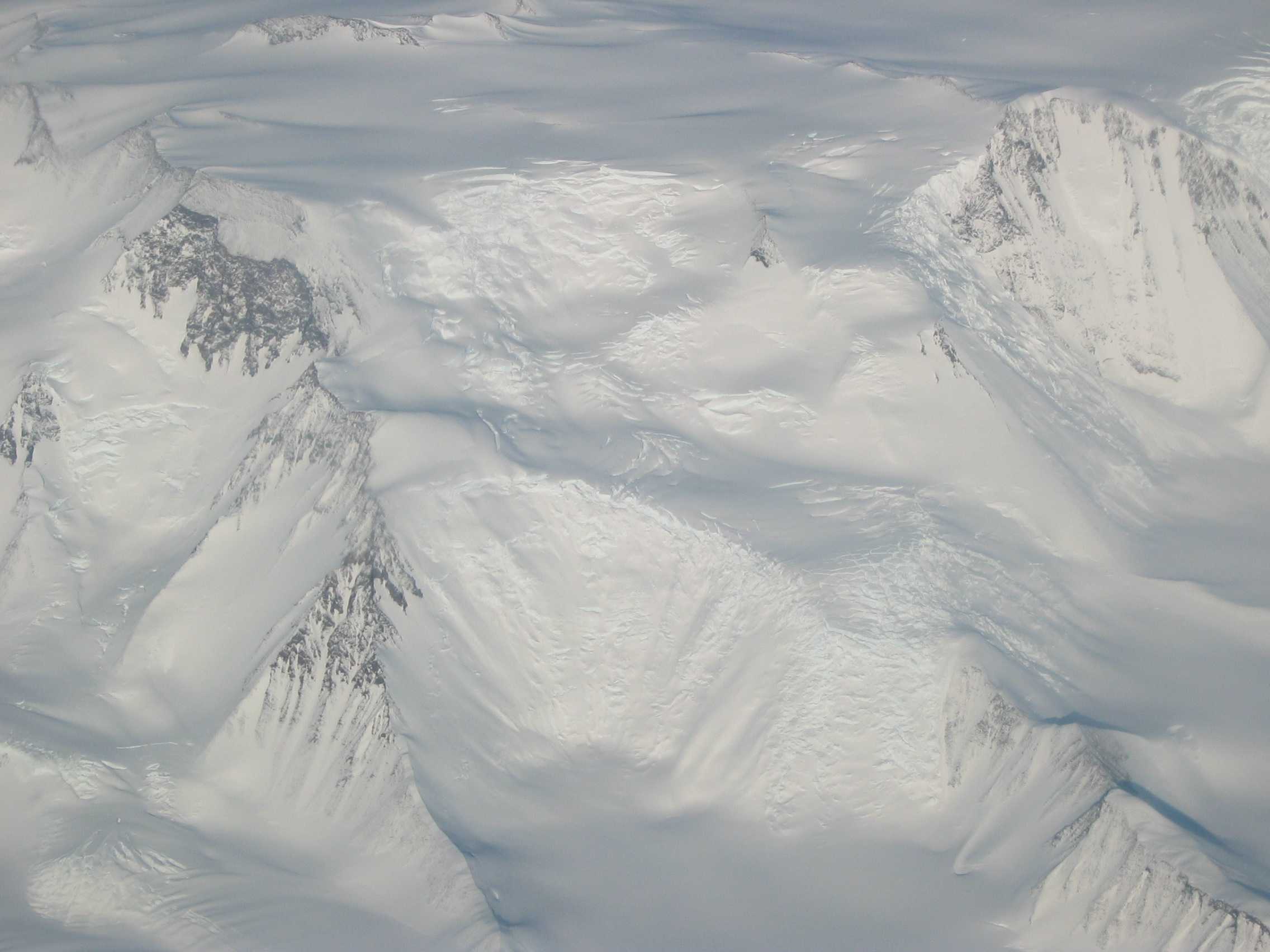
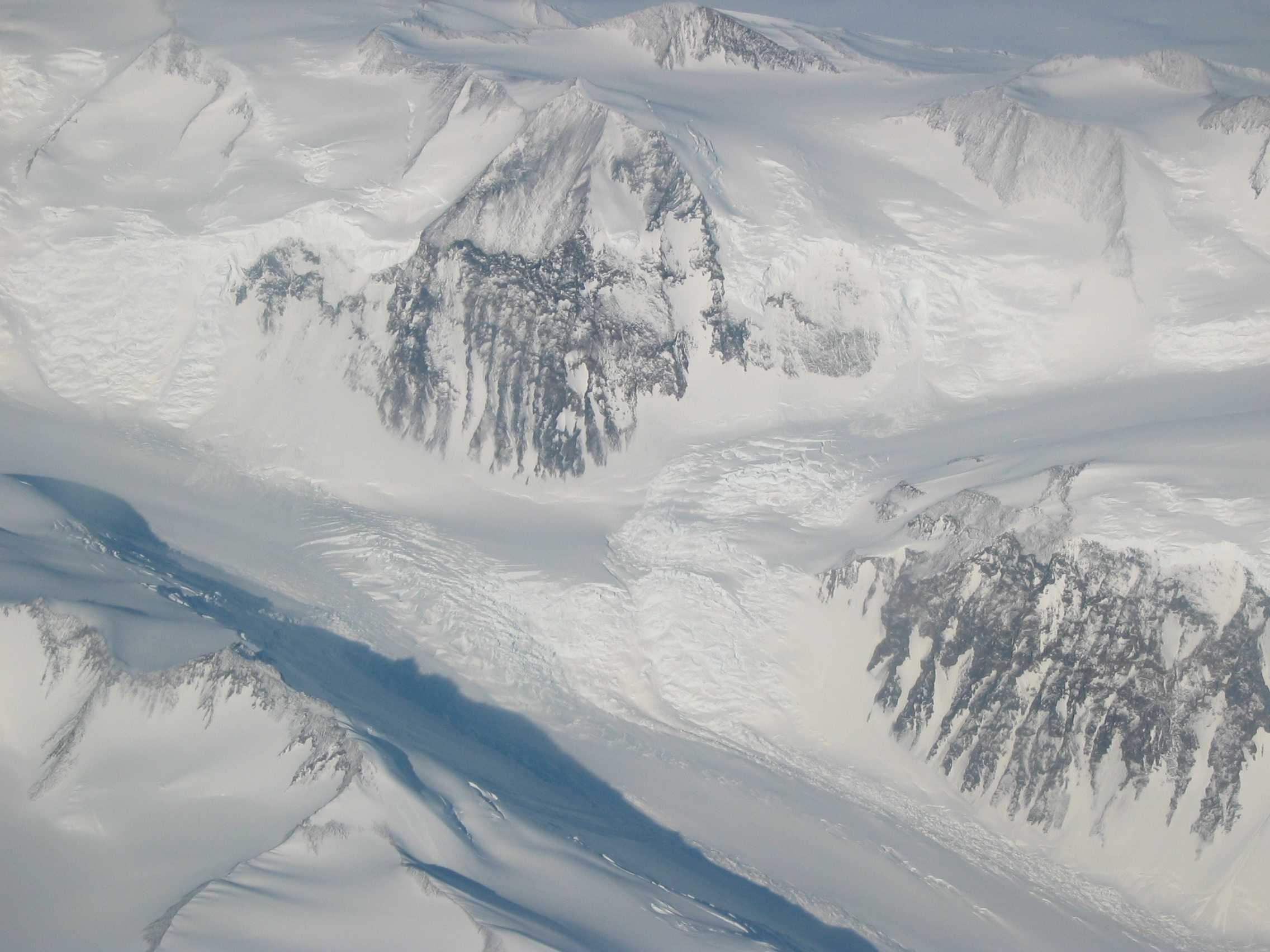
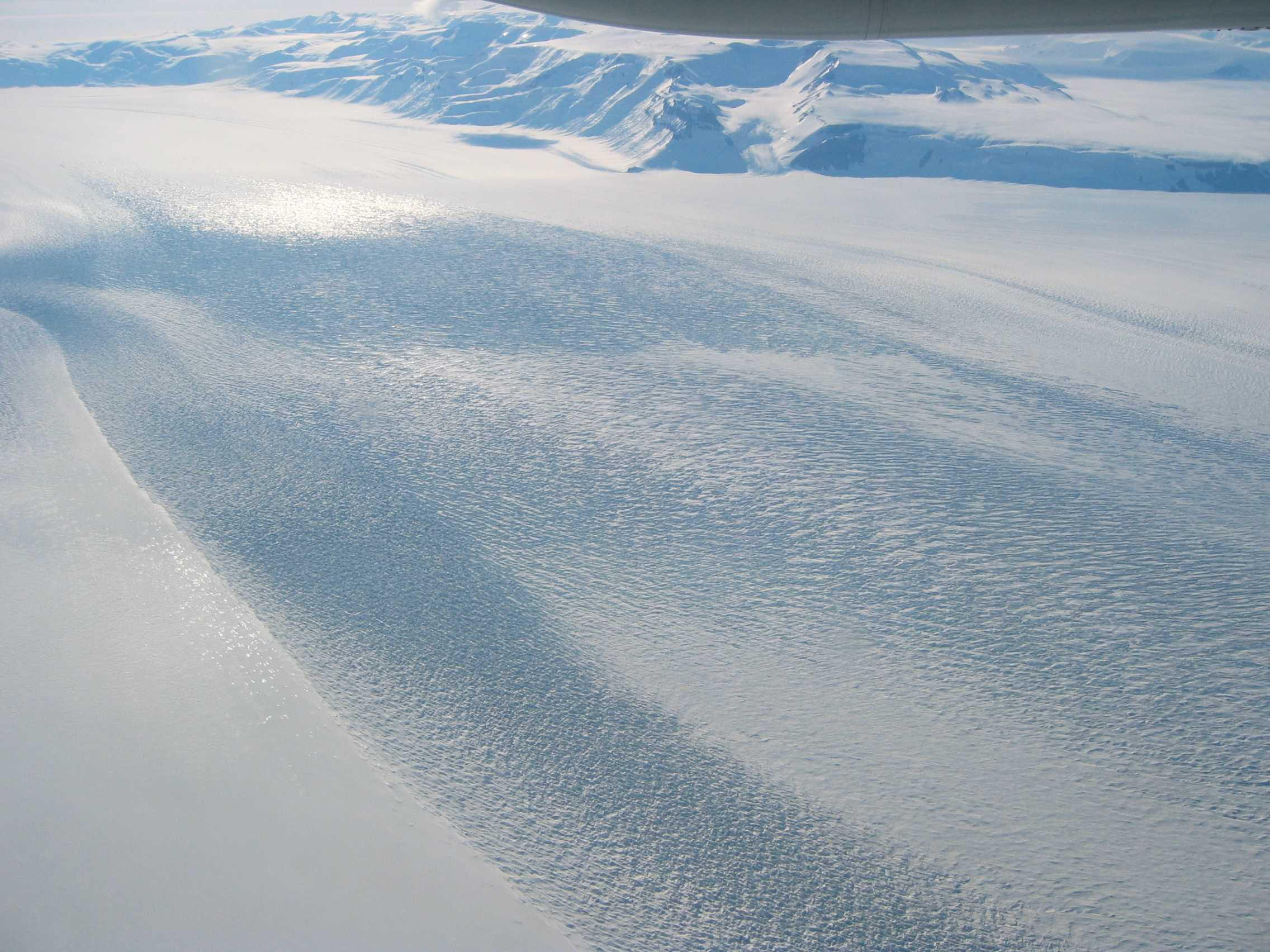
The
LC-130 flight to the South Pole travels along the Trans-Antarctic
mountains crossing the most beautiful and otherworldly
landscape I've seen. It's the most scenic flight going.
|
| Amundsen-Scott
South Pole Station |
|
|
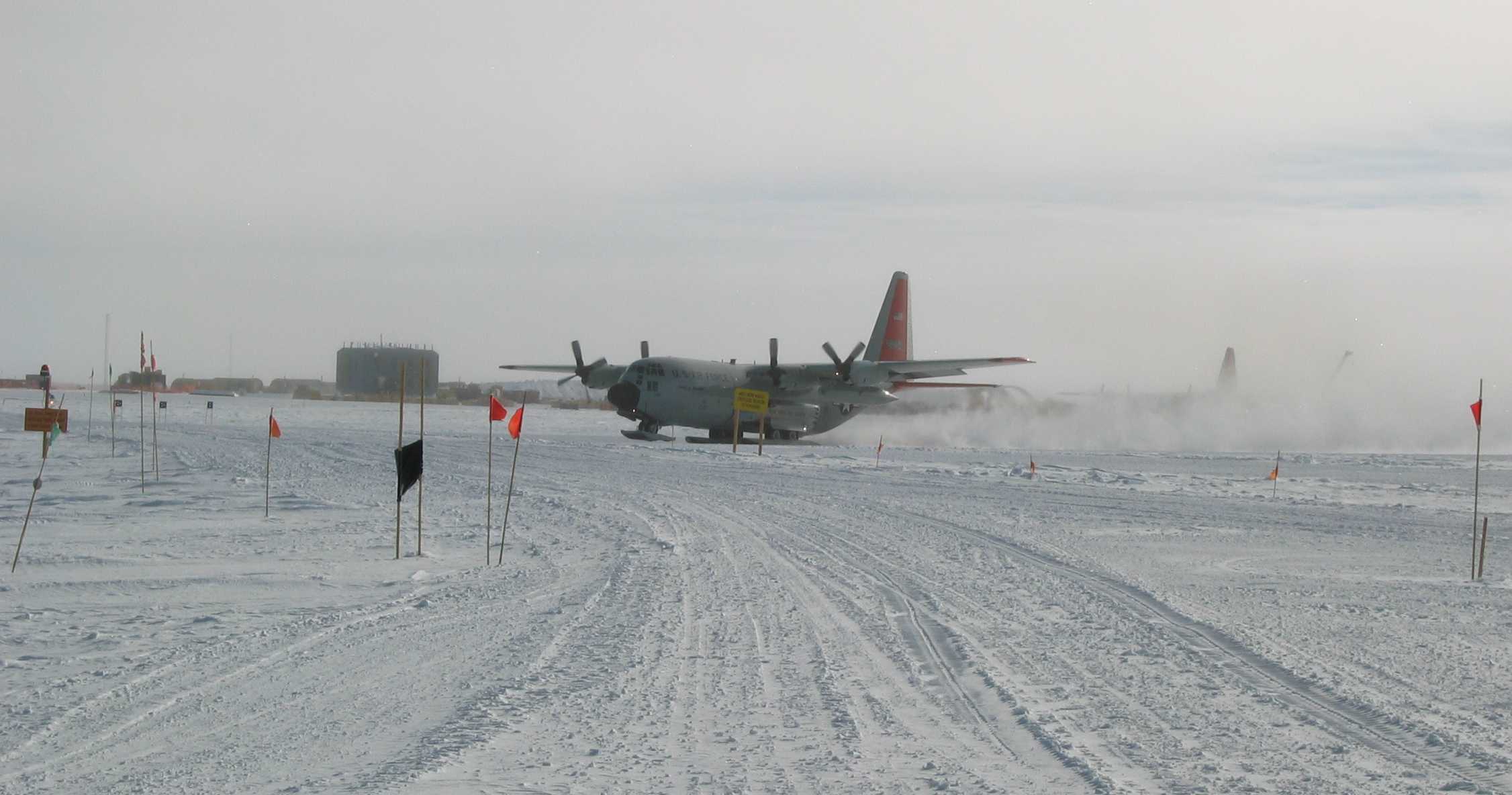
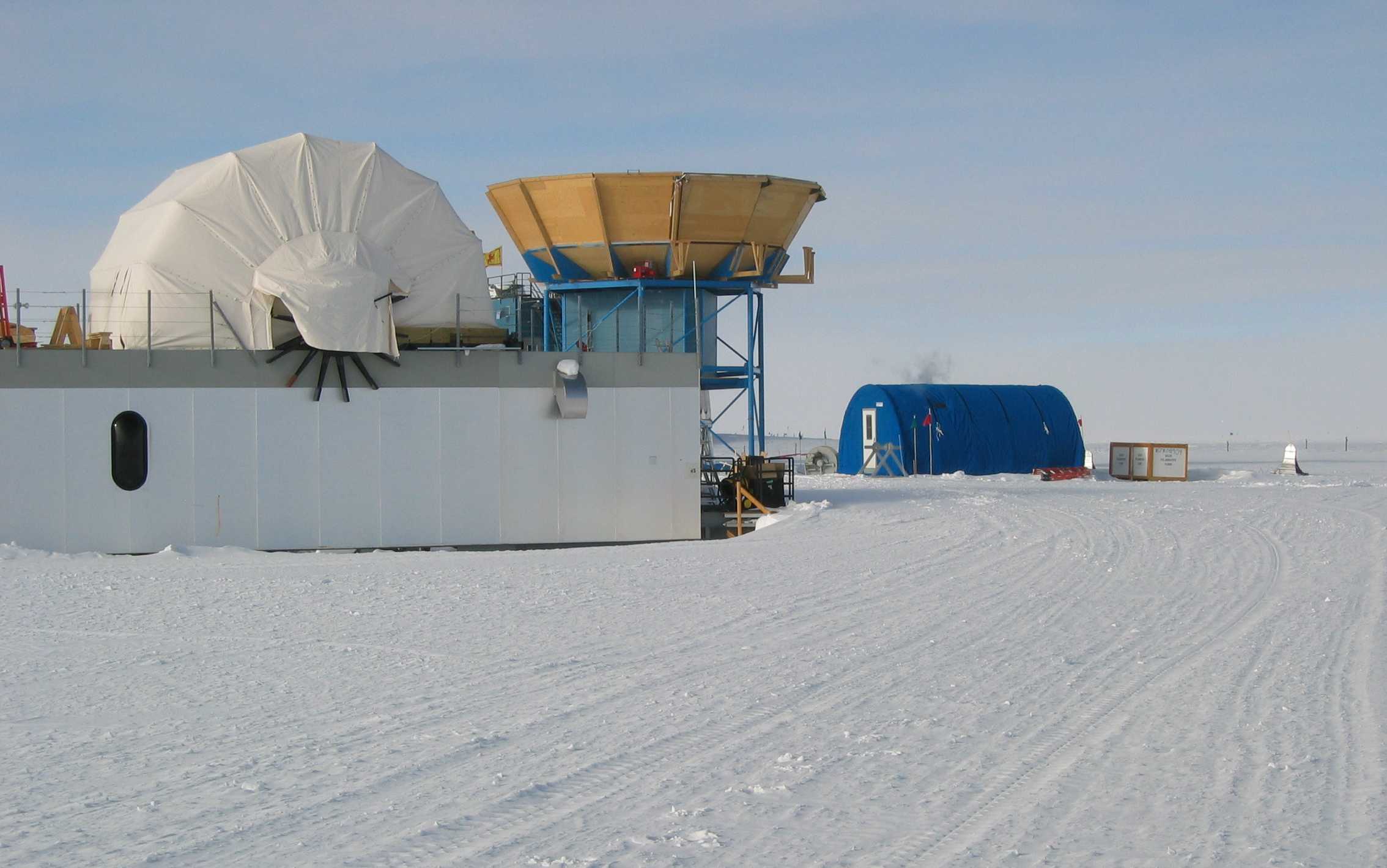
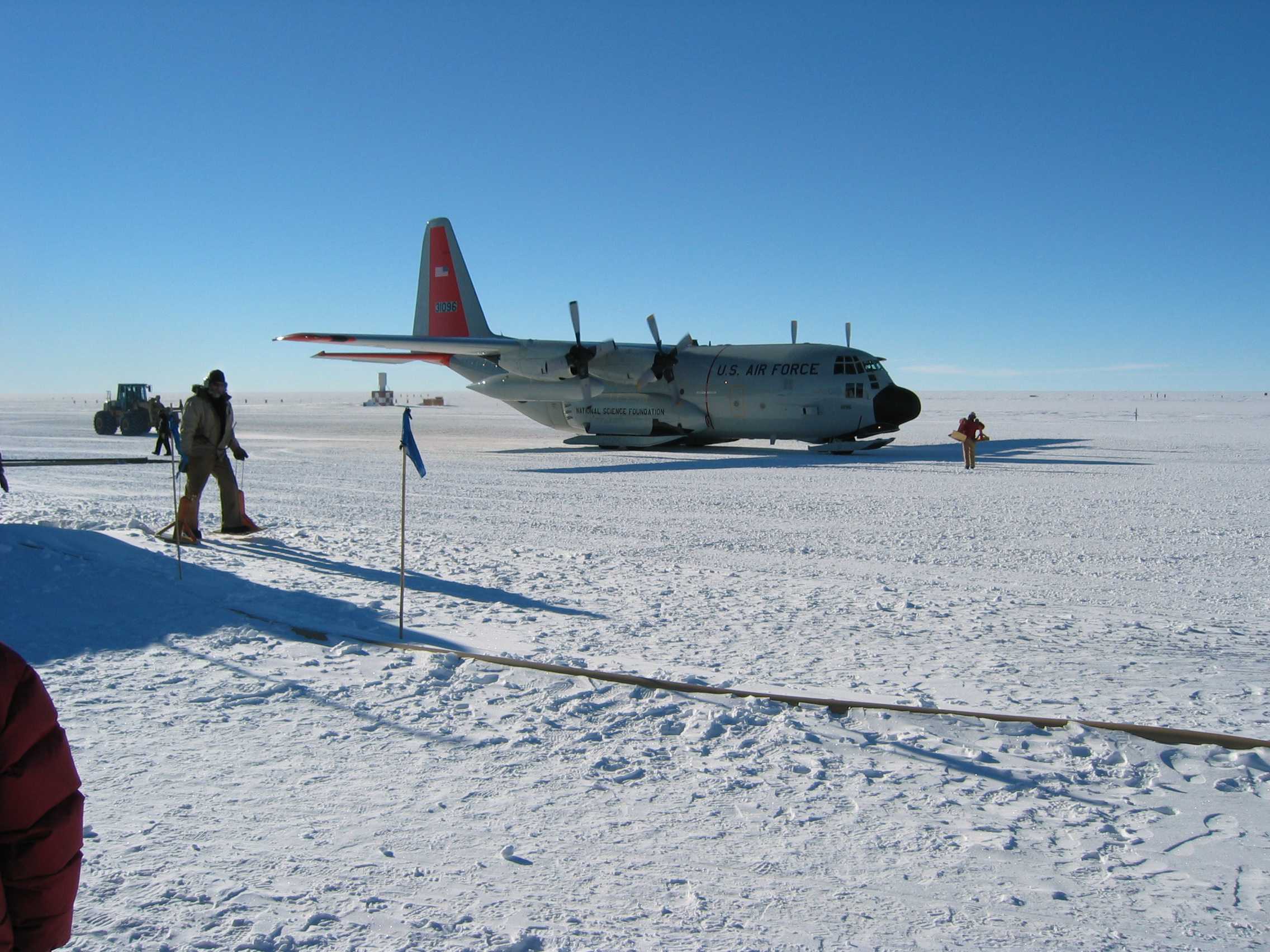
An
LC-130 rumbling down the snow runway taking off for McMurdo.
Some of the station buildings are in the background. We
have to cross the runway to get to the dark sector where
the Gmount is set up in the little blue Weatherhaven tent
called the "SPIFI dome." You can see AST/RO in the foreground
and the old DASI plywood ground shield in the background.
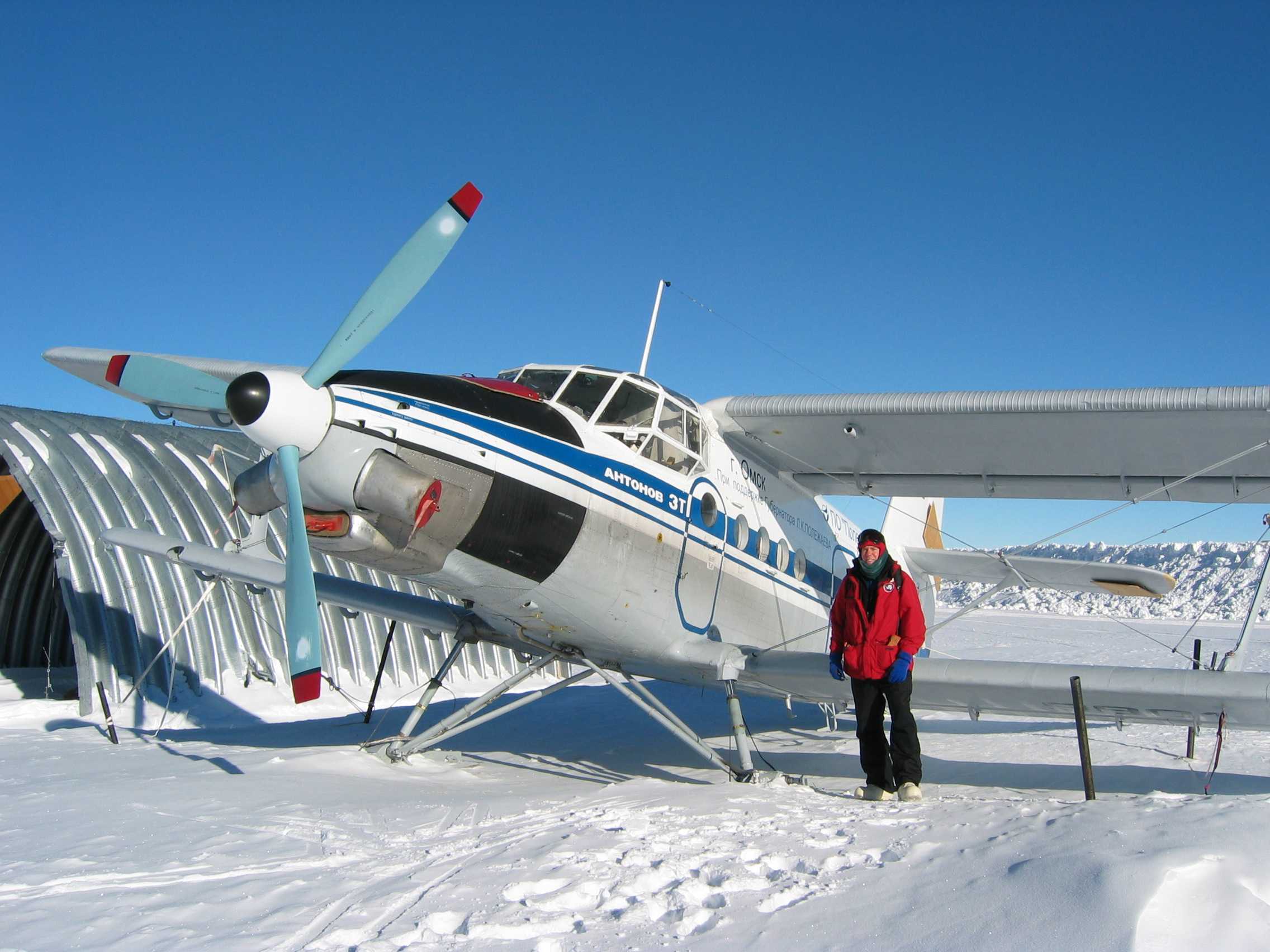
Kevin and I took a little R&R and walked out to see the
abandoned Russian plane. It was flown in last summer,
broke down, and was left when the crew & passengers flew
out on a chartered Twin-Otter. It's got fabric wings!
|
| Deploying
the telescope |
 |
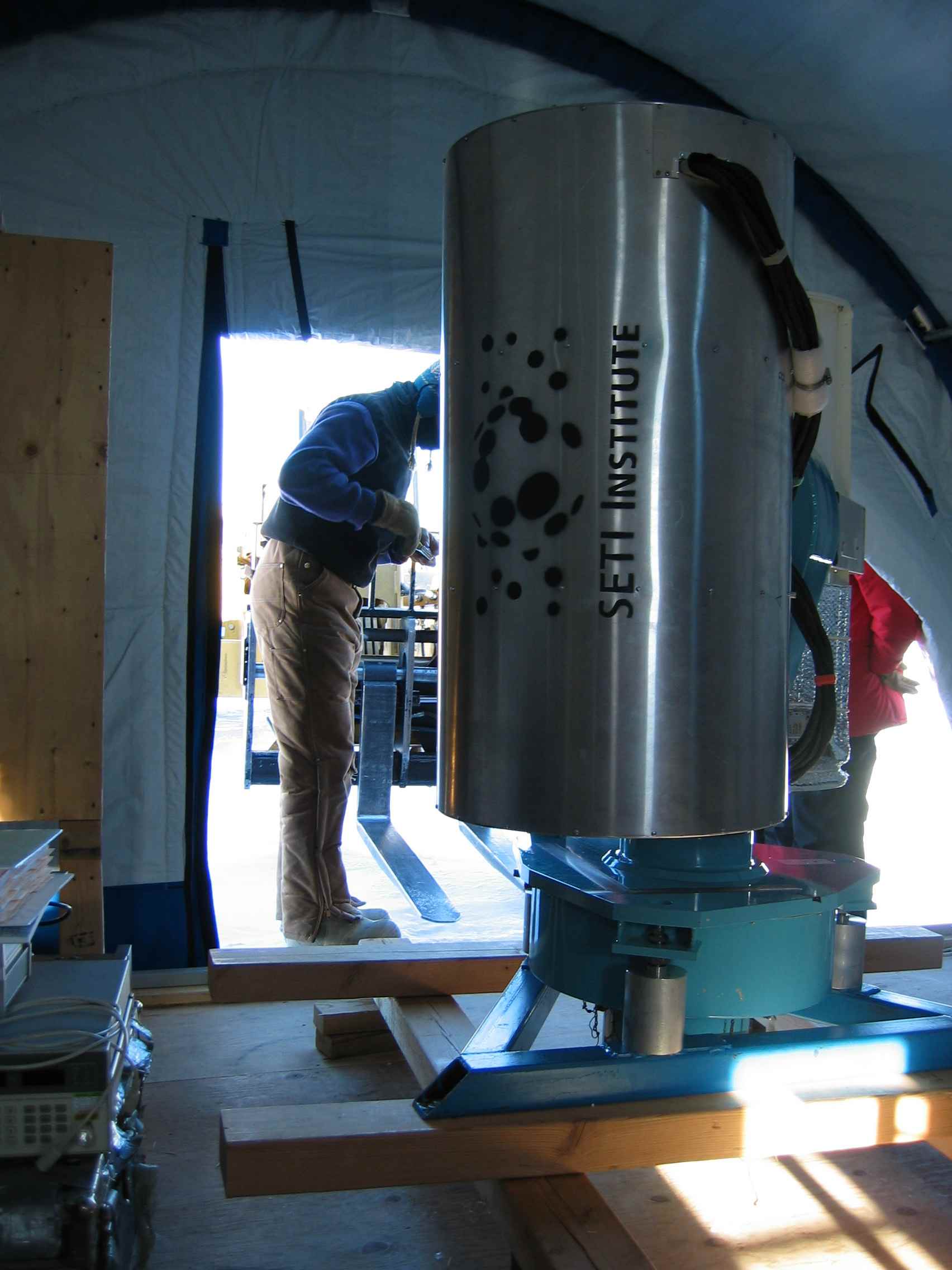
The
Vulcan South photometer is on the Gmount and ready to
move out of the Weatherhaven tent. |
|
|
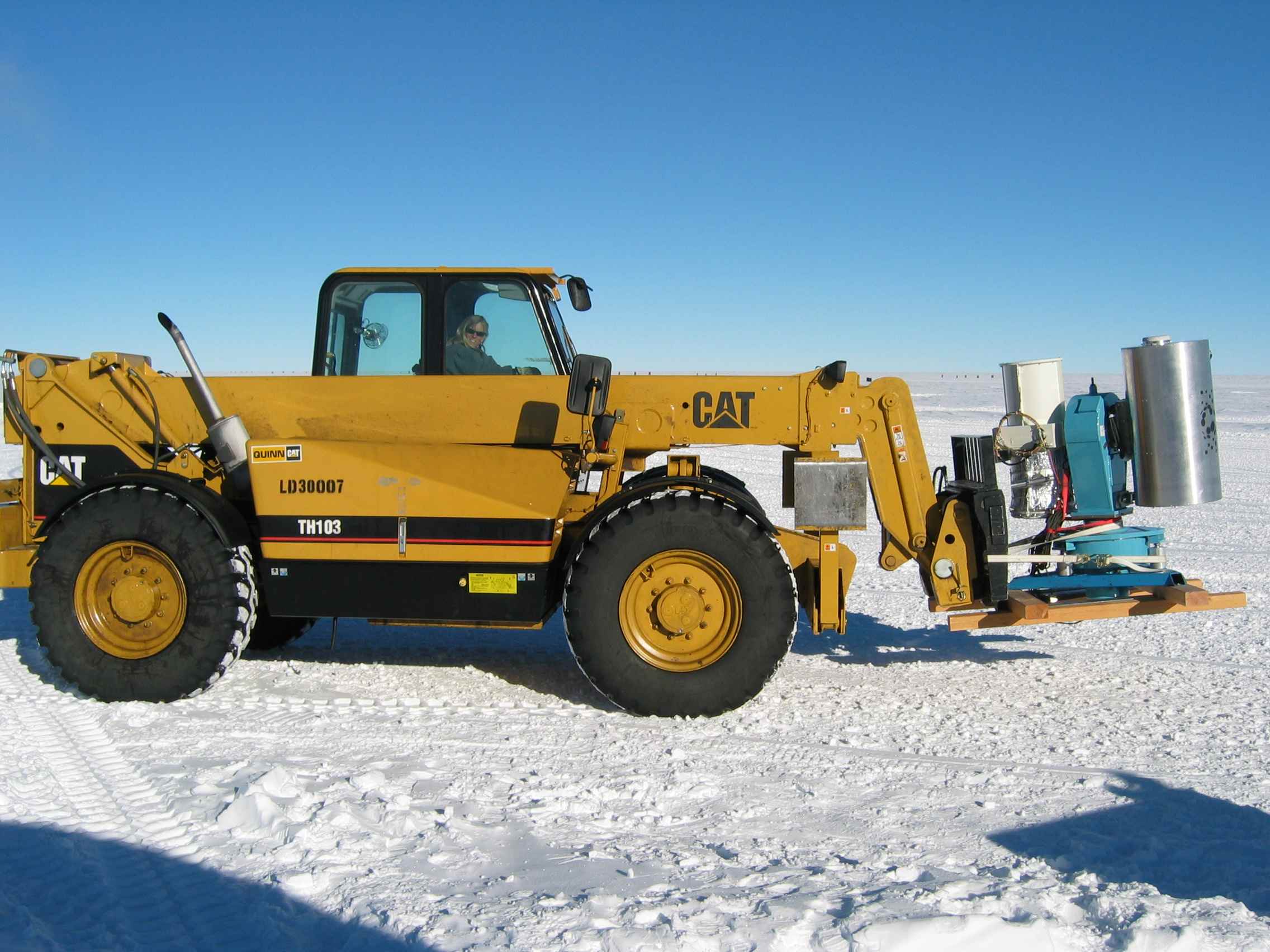
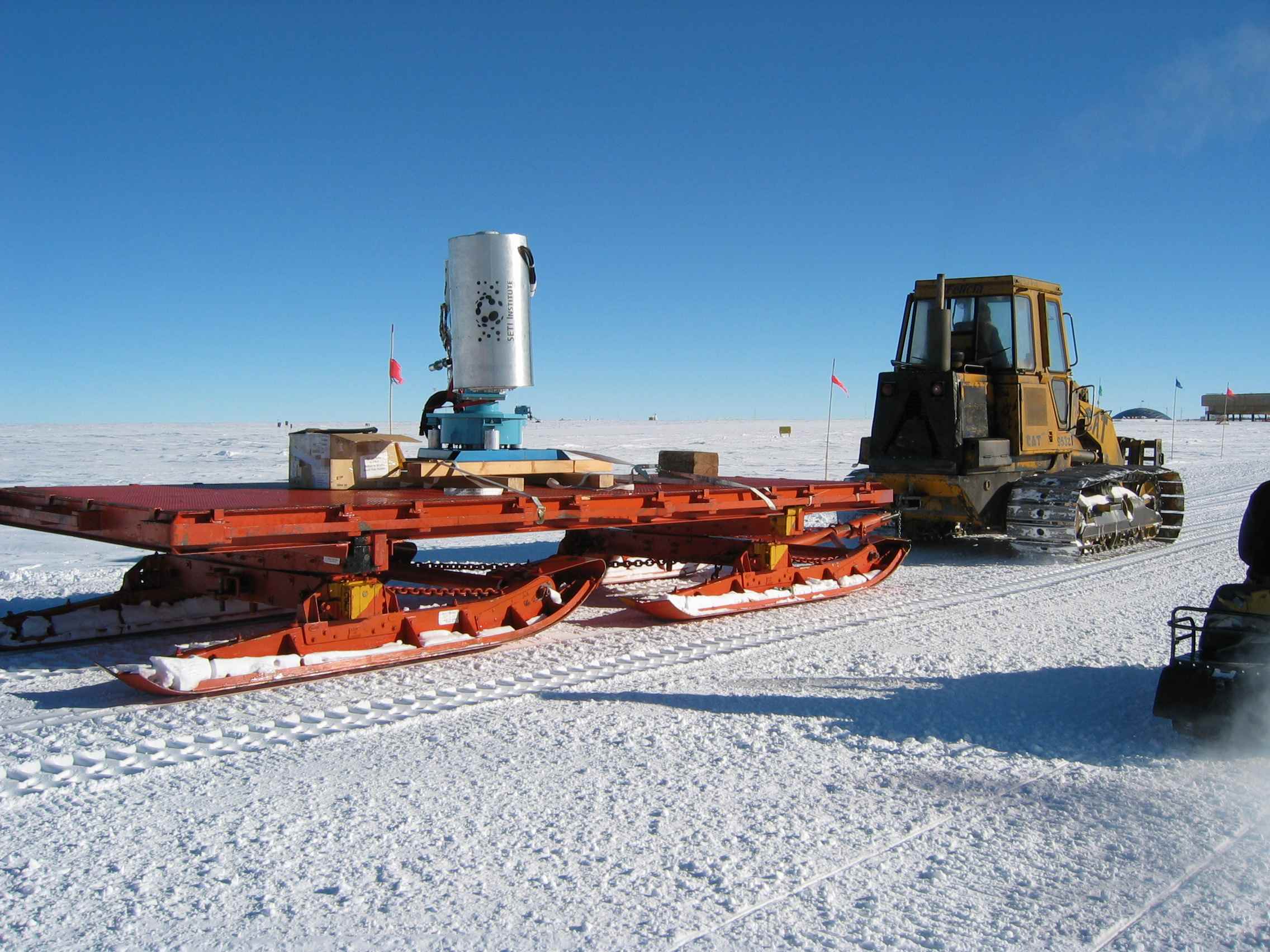
Carpenter
Dave is adjusting the forks on the extending fork-lift.
The Gmount the with Vulcan South photometer and UNSW's
Antarctic Fibre-Optic Spectrometer went on the amazing
extending Cat fork-lift over to a giant sled for the two
kilometer sleigh ride from the Dark (dork) Sector to the
new AASTO location in the Clean Air sector. |
|
|
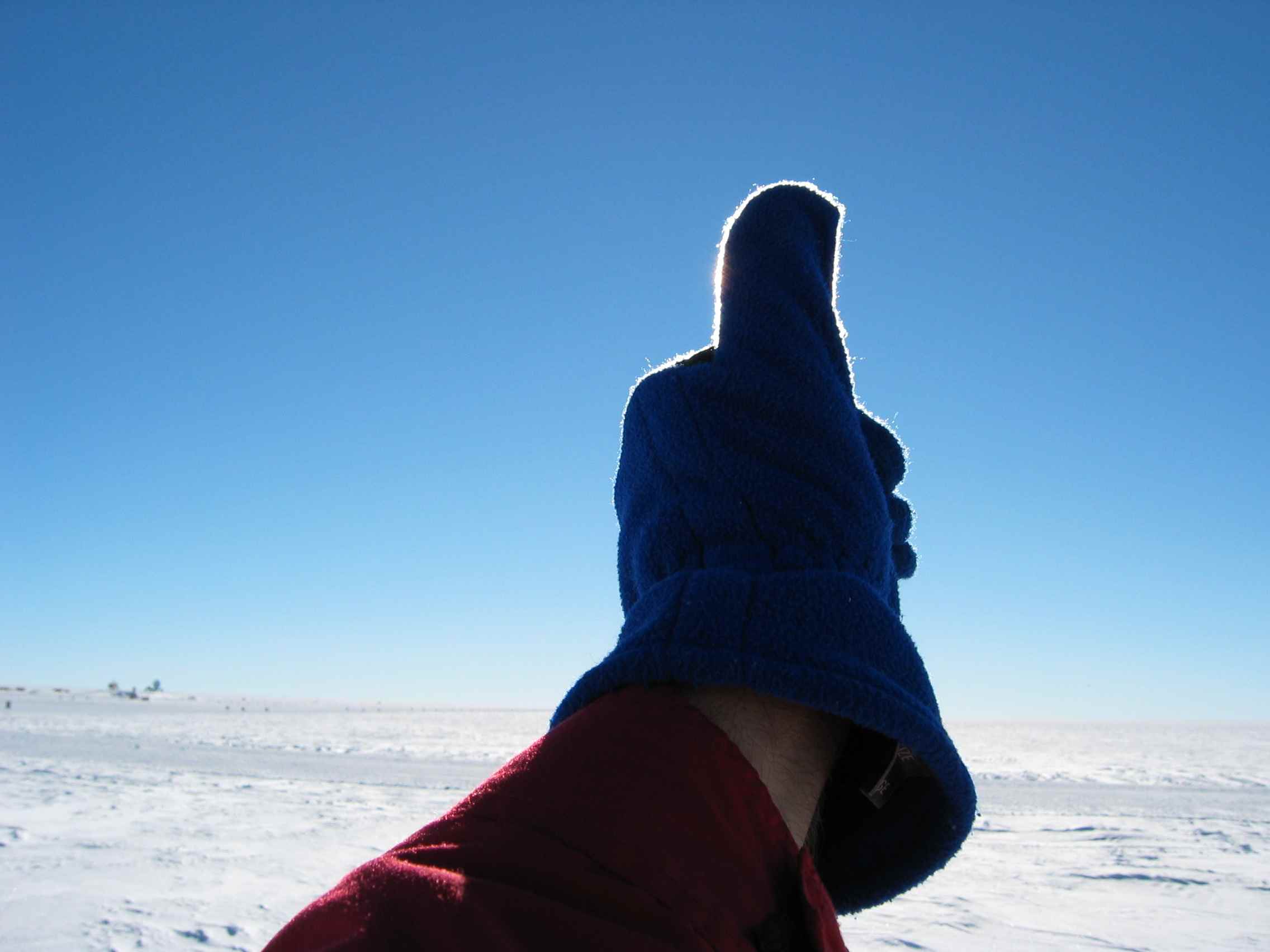
We
got stuck at the runway crossing while Jason Dunham's
plane was landing, so I did a science experiment. The
sky is so clear at the South Pole that you can cover the
Sun with just your thumb and see dark blue sky right next
to the Sun. Try this at home (but be careful not to look
at the Sun!) and you'll see that the sky is very bright
near the Sun due to scattering from particles in the air.
|
|
|
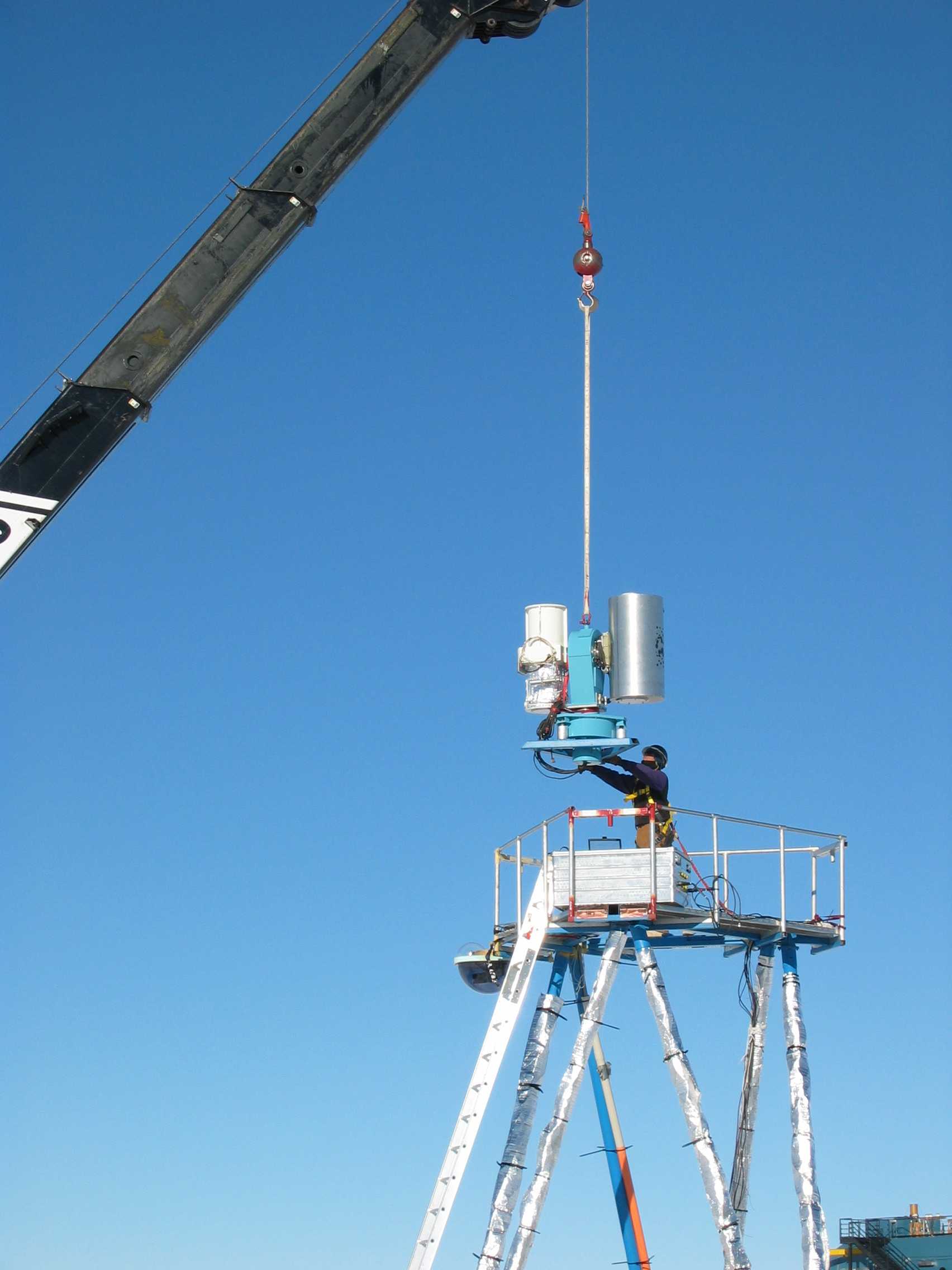
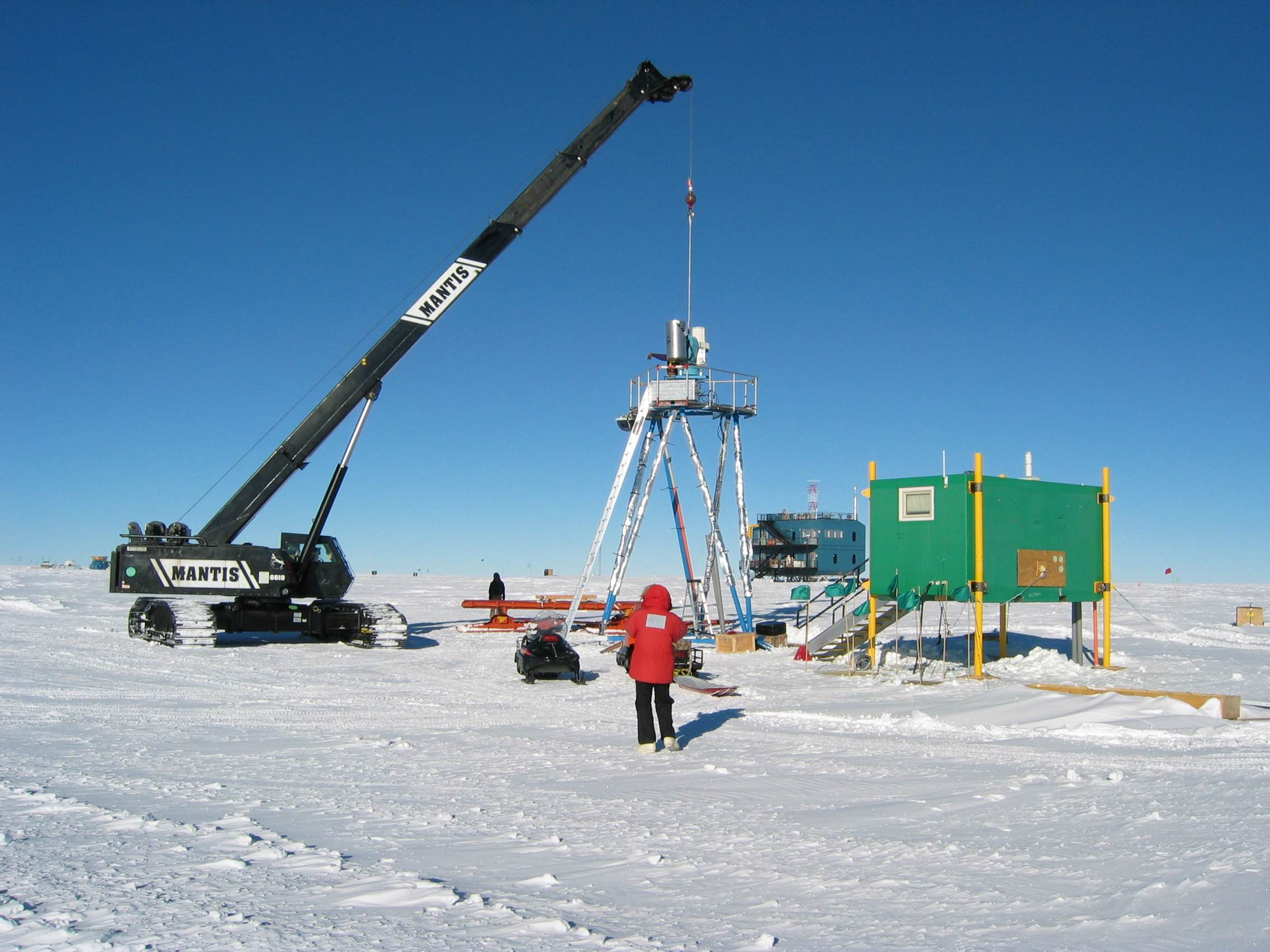
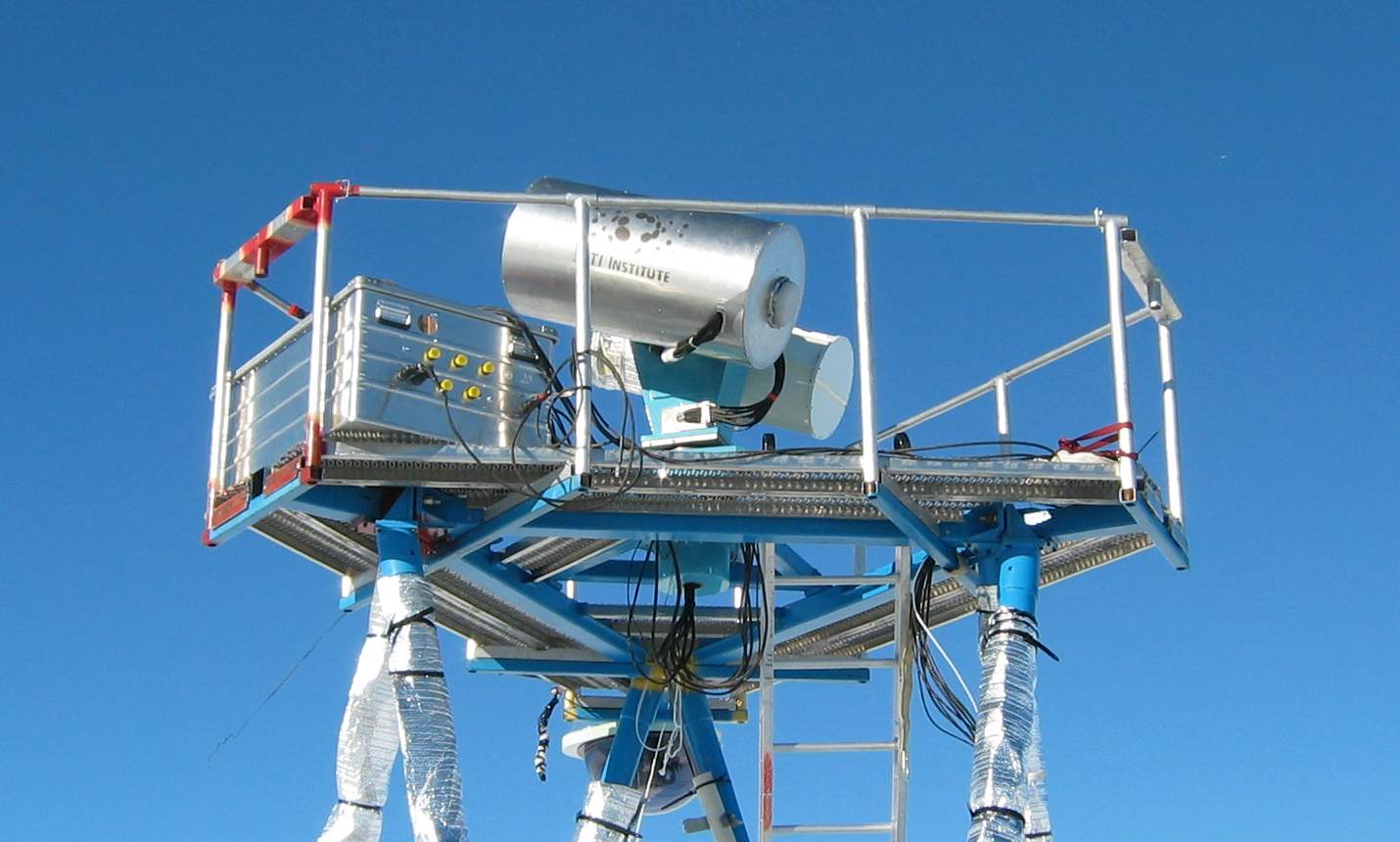
The sled eventually made it's way over to the AASTO
and we found out that we were scheduled for the Mantis
crane at 2:30 that after noon. After a long slow drive
from the station, the crane made quick work of the lift
onto the tower. Carpenter Dave guided the Gmount down
onto the tower, and in about three minutes the job was
done with Vulcan South securely on the tower. The external
equipment shelter can be seen in the foreground of this
close-up.
|
| First
Light! |
 |
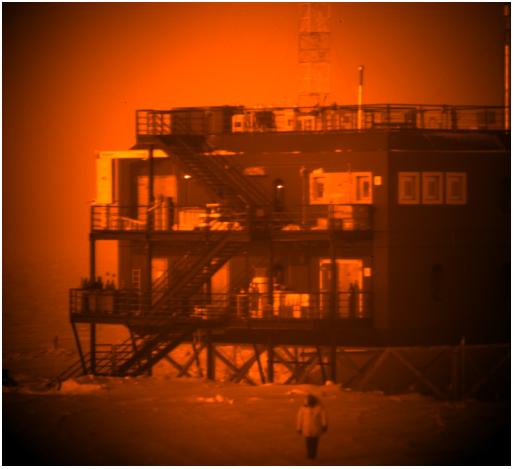
After
several frustrating days of computer problems we finally
got "first light" from the Vulcan South photometer at
the South Pole. You can see Mark Jarnyk walking back from
the Atmospheric Research Observatory (ARO). The vignetting
(darkening around the edges) is caused by the very short
exposure time, which didn't allow the shutter time to
fully open. It's too bright to take longer exposures.
|